
An ancient book in today’s words

The Way that can be explained
is not the Way itself.

The Tao Te Ching begins by saying the Way can’t be put into words. We built this app to make the book easier to follow, so you can bring it into your own life. Every chapter comes in three versions and has an interpretation that explains what it means.

The Tao app icon

An app by Wuji for iPhone, iPad, Apple TV and Apple Watch

Tao Te Ching Explained

Download on the App Store Coming soon to theApp Store
Introduction

What is the Tao Te Ching?

The Tao Te Ching is a short book from ancient China, traditionally credited to Lao-tzu. People have read it for more than two thousand years, as philosophy, as a guide to ruling, as religion and as a way to quiet the mind.

Where the Tao Te Ching comes from

Listen · 2 minutes

Versions

Find the one that makes sense to you

Download from the App Store for all eighty-one chapters. The first nine are free, and chapters 11 and 33 are here as a preview.

Coming soon to the App Store: all eighty-one chapters. The first nine are free, and chapters 11 and 33 are here as a preview.

第一章

Chapter one

This is where the book begins. Switch between the three versions and the interpretation, and press play to hear any of them.

A classic English translation

The Tao that can be trodden is not the enduring and unchanging Tao. The name that can be named is not the enduring and unchanging name.

(Conceived of as) having no name, it is the Originator of heaven and earth; (conceived of as) having a name, it is the Mother of all things.

Always without desire we must be found,
If its deep mystery we would sound;
But if desire always within us be,
Its outer fringe is all that we shall see.

Under these two aspects, it is really the same; but as development takes place, it receives the different names. Together we call them the Mystery. Where the Mystery is the deepest is the gate of all that is subtle and wonderful.

Modern

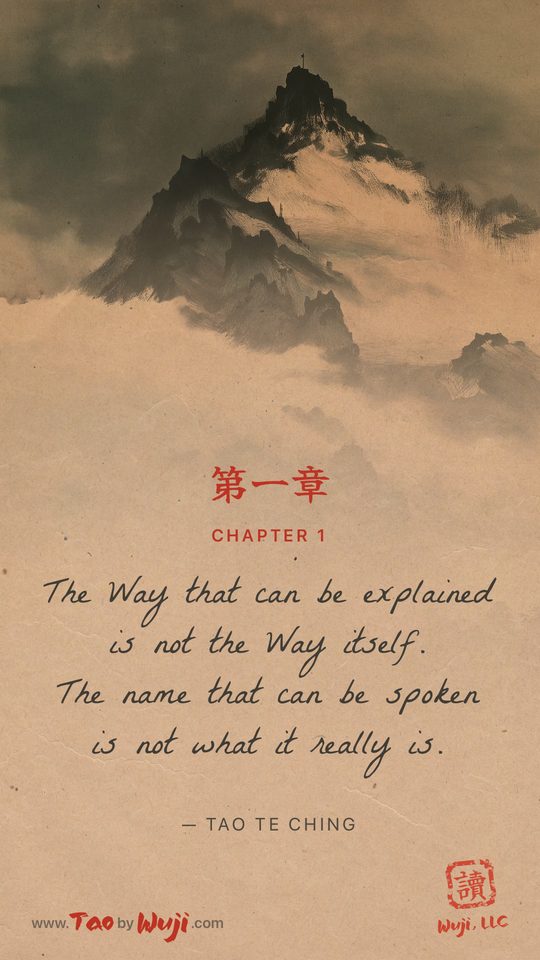
The Way that can be explained
is not the Way itself.
The name that can be spoken
is not what it really is.

Nameless, it is where the universe begins.
Named, it is where everything we know comes from.

When you want nothing,
you see the wonder underneath.
When you want something,
you see only the surface.

Wonder and surface come from the same place.
They only have different names.
Together they are the great unknown.
And past that unknown, a deeper one,
the door to every wonder.

Poetic

A way that words can walk
is not the lasting Way.
A name that lips can shape
is not the lasting name.

Nameless, the dawn of earth and sky.
Named, the mother of all that is.

So stay empty of wanting,
and you will see the mystery.
Stay full of wanting,
and you will see where it ends.

These two rise from a single spring
and are given different names.
Their oneness we call the dark.
Dark, and darker still,
the gate of every wonder.

Interpretation

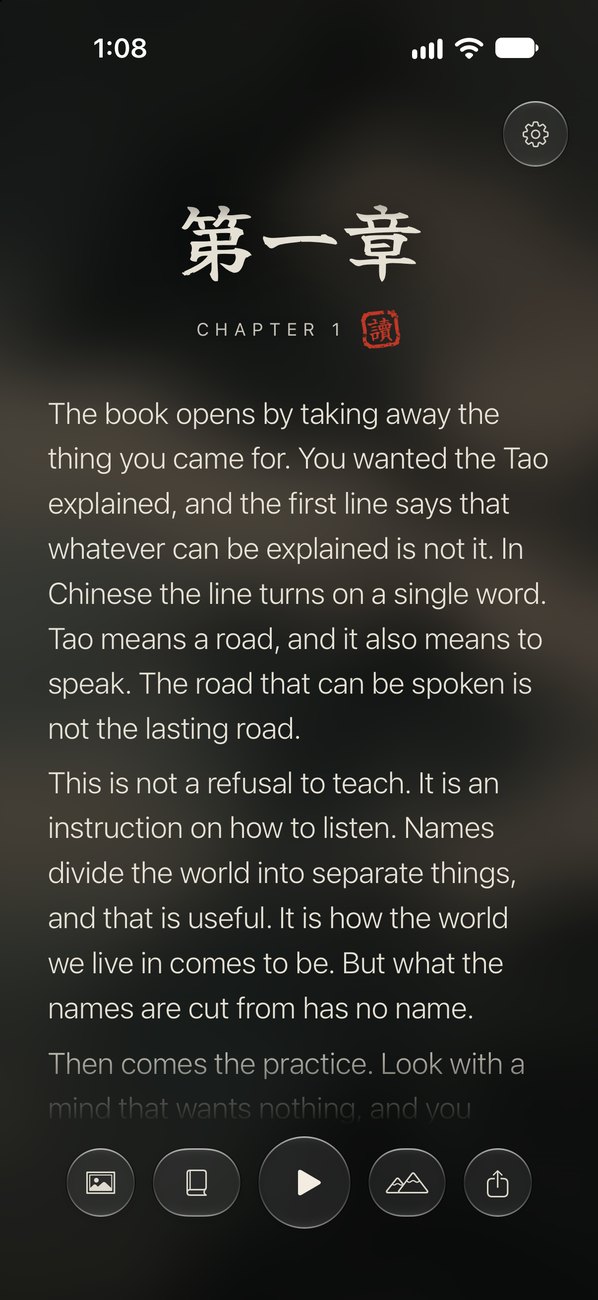
The book opens by taking away the thing you came for. You wanted the Tao explained, and the first line says that whatever can be explained is not it. In Chinese the line turns on a single word. Tao means a road, and it also means to speak. The road that can be spoken is not the lasting road.

This is not a refusal to teach. It is an instruction on how to listen. Names divide the world into separate things, and that is useful. It is how the world we live in comes to be. But what the names are cut from has no name.

Then comes the practice. Look with a mind that wants nothing, and you sense the depth behind things. Look with a mind that wants, and you see their edges, where one thing stops and another starts. Later teachers read this as a description of sitting in stillness.

And the chapter does not ask you to choose. Depth and edges come from one source. To hold both at once is what it calls the dark, the gate of every wonder.
第十一章

Chapter eleven

Switch between the three versions and the interpretation, and press play to hear any of them.

A classic English translation

The thirty spokes unite in the one nave; but it is on the empty space (for the axle), that the use of the wheel depends. Clay is fashioned into vessels; but it is on their empty hollowness, that their use depends. The door and windows are cut out (from the walls) to form an apartment; but it is on the empty space (within), that its use depends. Therefore, what has a (positive) existence serves for profitable adaptation, and what has not that for (actual) usefulness.

Modern

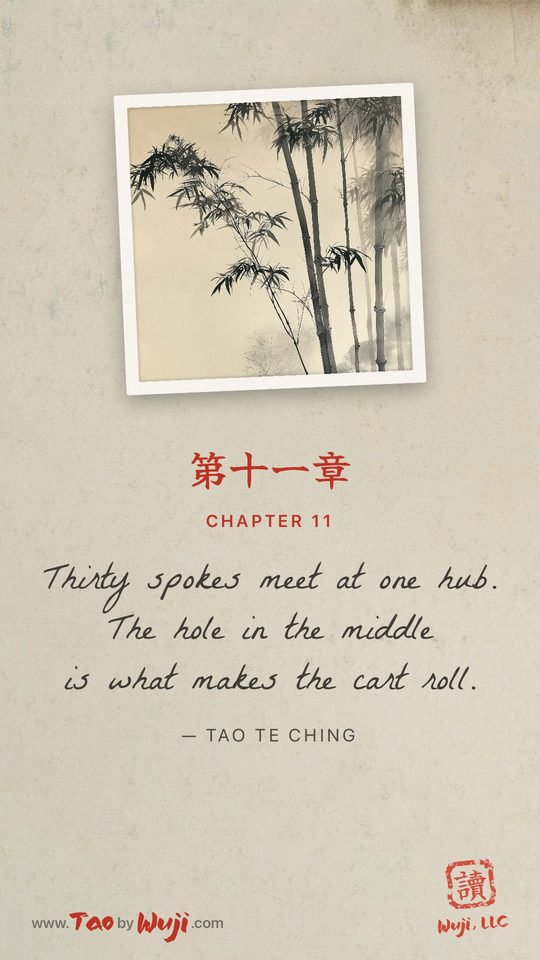
Thirty spokes meet at one hub.
The hole in the middle
is what makes the cart roll.

Shape clay into a pot.
The hollow inside
is what makes it useful.

Cut doors and windows for a room.
The empty space
is what makes it a place to live.

So what is there is what we have.
What isn't there is what we use.

Poetic

Thirty spokes share a single hub.
Where it is nothing,
there is the use of the cart.

Clay is kneaded into a vessel.
Where it is nothing,
there is the use of the vessel.

Doors and windows are cut for a room.
Where it is nothing,
there is the use of the room.

So from being comes the gain,
and from nothing comes the use.

第三十三章

Chapter thirty-three

Switch between the three versions and the interpretation, and press play to hear any of them.

A classic English translation

He who knows other men is discerning; he who knows himself is intelligent. He who overcomes others is strong; he who overcomes himself is mighty. He who is satisfied with his lot is rich; he who goes on acting with energy has a (firm) will.

He who does not fail in the requirements of his position, continues long; he who dies and yet does not perish, has longevity.

Modern

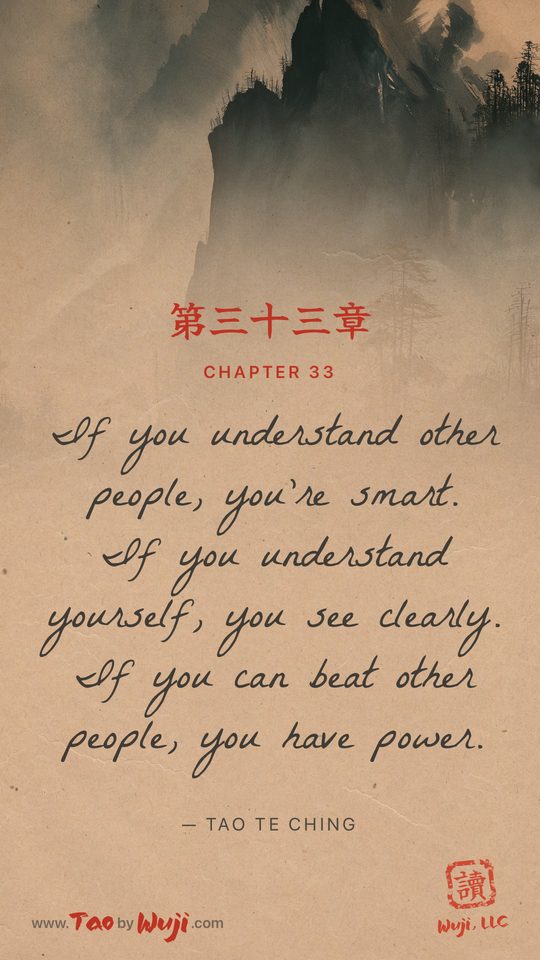
If you understand other people, you're smart.
If you understand yourself, you see clearly.
If you can beat other people, you have power.
If you can master yourself, you are strong.

If you know when you have enough, you're rich.
If you keep going, you have purpose.
If you never lose your footing, you last.
And if you die but are not gone,
that is a long life.

Poetic

To know others is cleverness.
To know yourself is light.
To master others takes force.
To master yourself is strength.

To know what is enough is wealth.
To press on is resolve.
Not to lose your place is to last.
To die, and not to perish,
is long life.

One line from chapter sixty-four in three versions

…the journey of a thousand li commenced with a single step.

Traditional

A journey of a thousand miles
starts from the ground under your feet.

Modern

The road of a thousand miles
begins beneath the foot.

Poetic
Interpretation

Explaining what can’t be put into words

Traditional is a classic English translation. Modern says the same thing in plain English, and Poetic keeps the images and the rhythm so you can feel it.

The interpretation isn’t another version of the text. It’s a spoken explanation, a little over a minute long, of what the chapter means and what it asks of you. It works through the difficult lines, and most also say how the early commentators read them. It plays after each chapter unless you turn that off, and you can also listen to it on its own.

Chapter one’s interpretation in Tao, shown as a page of text
Living paintings

A moving painting behind every chapter

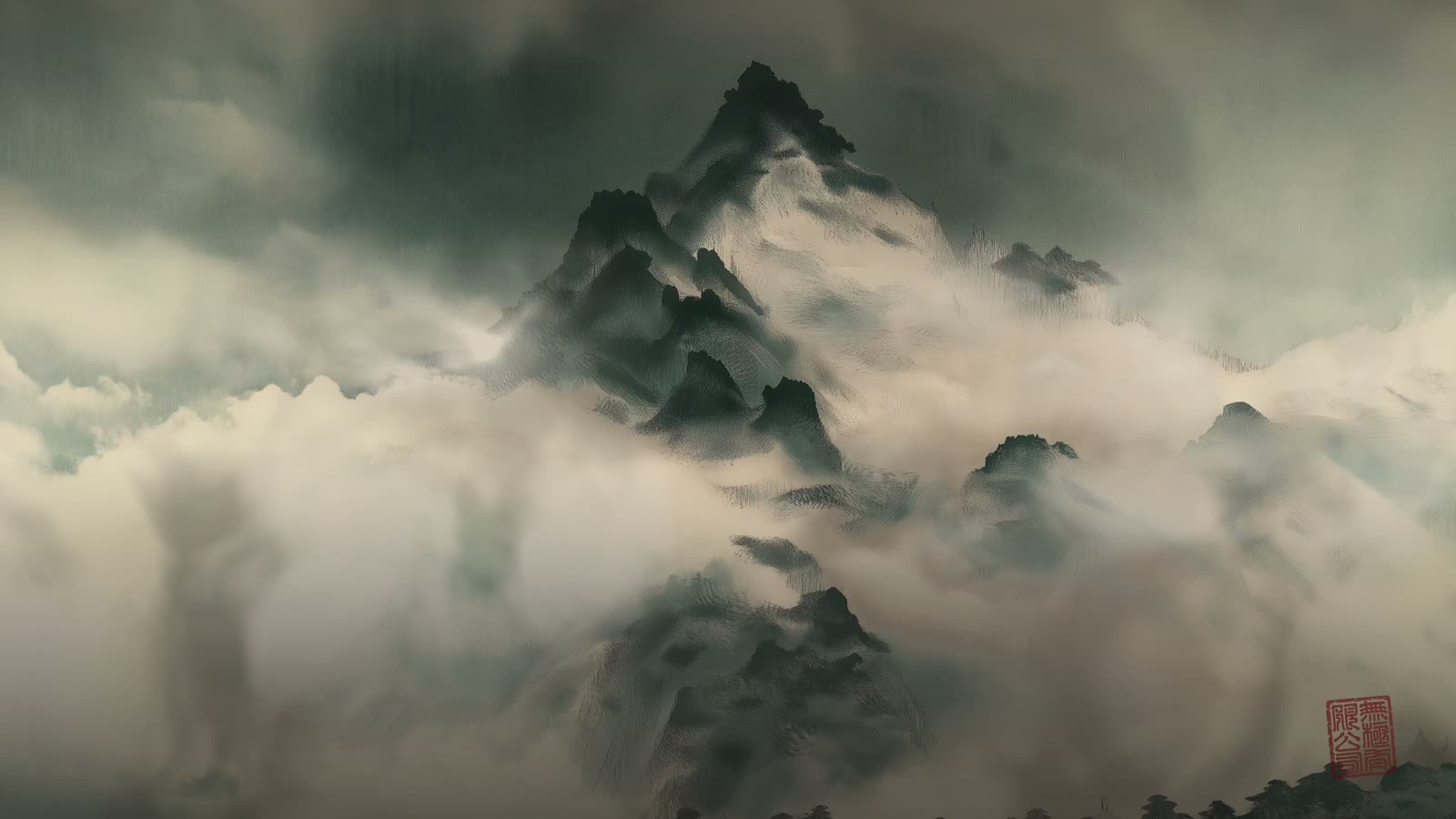
Each chapter is read aloud over an ink painting that moves, and a new painting begins every nine chapters. The slow movement gives your eyes somewhere to rest while you listen, so the words have room to land.

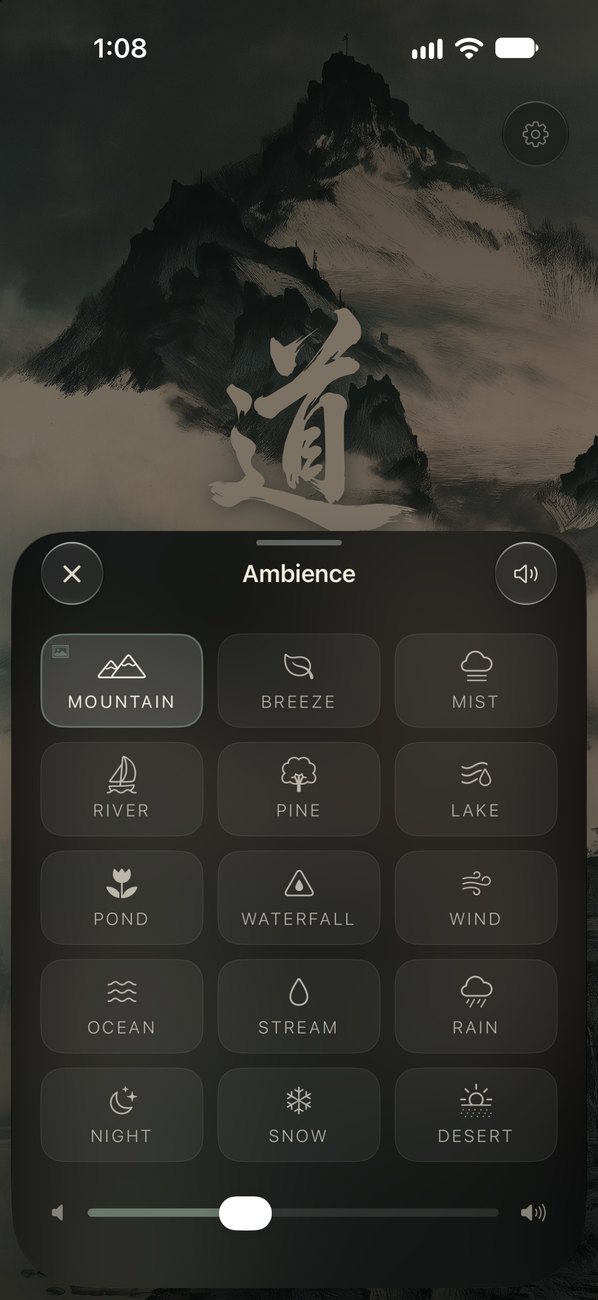
The ambience picker in Tao: a grid of sounds with a volume slider
Ambience

A quiet layer under the reading

A quiet sound under the voice is there to keep you inside the reading. Each painting comes with its own, and you can swap it or turn it off. Every sound is a real recording.

Captions and text

Two ways to read

Over the paintingCaptions can appear a line at a time.
On the pageWhile a chapter plays, you can follow the text as each word lights up.

Or leave both off and just listen.

Sharing

Share the lines that stay with you

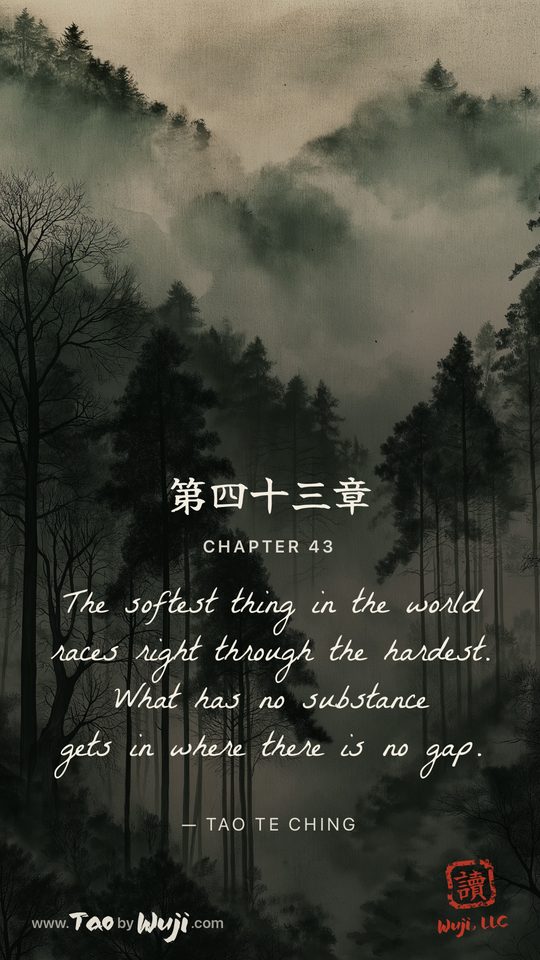
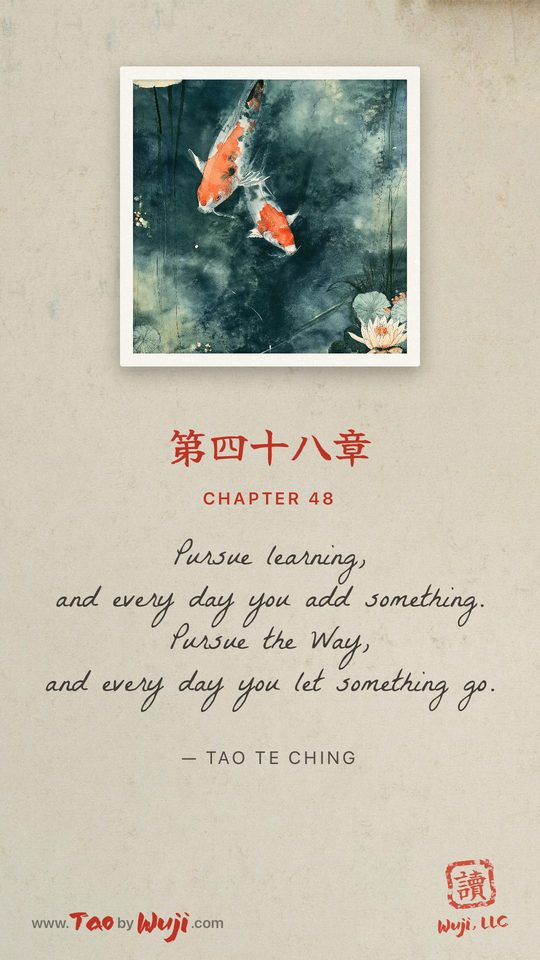
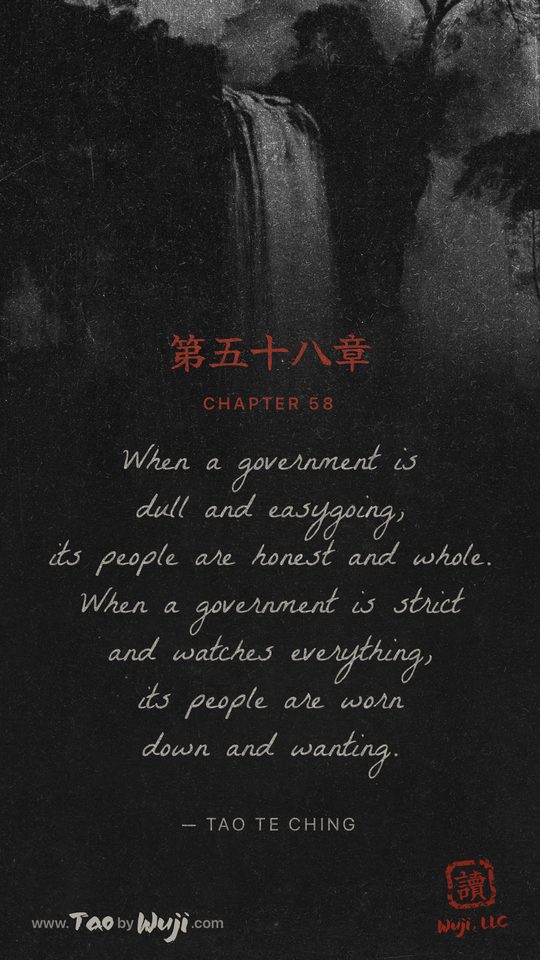
On iPhone and iPad, pick the lines you want and Tao makes a card of them to keep or to send to someone you care about.

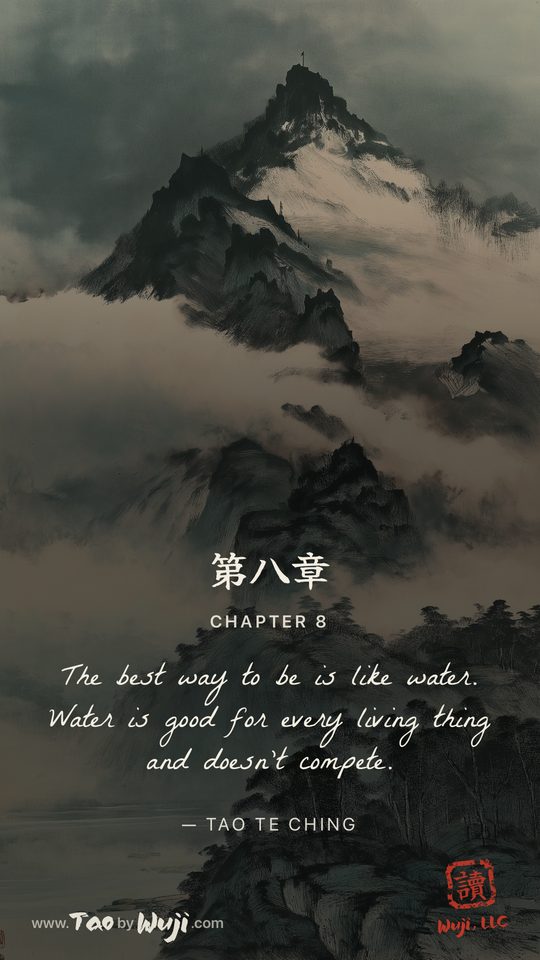
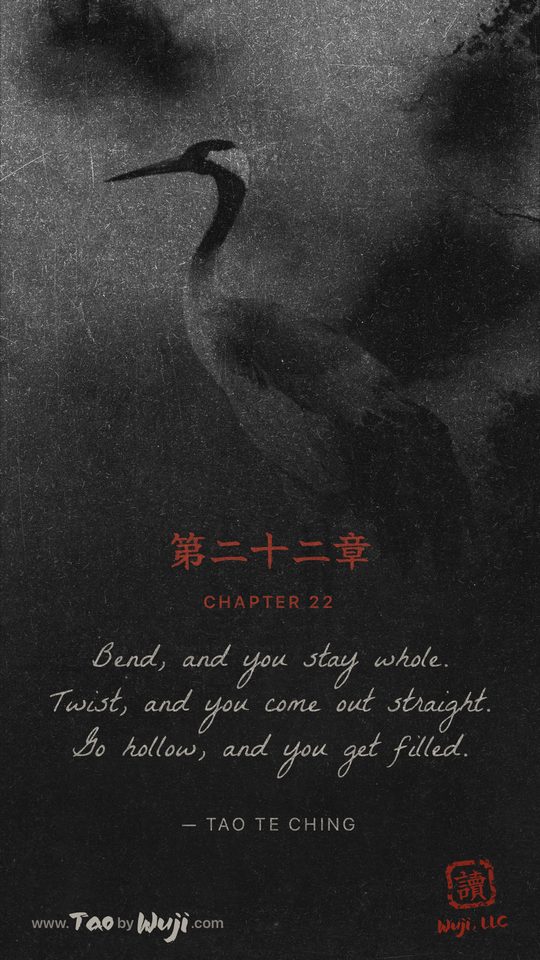
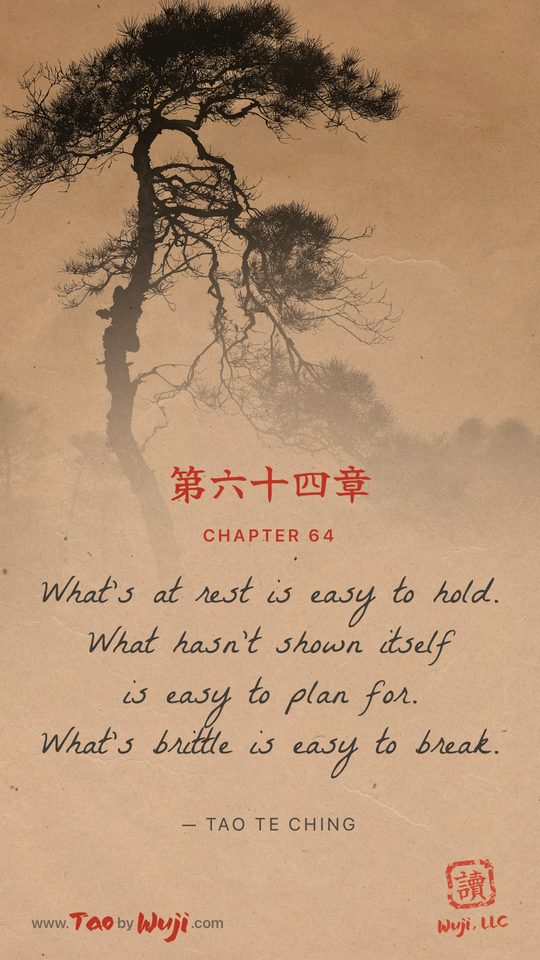
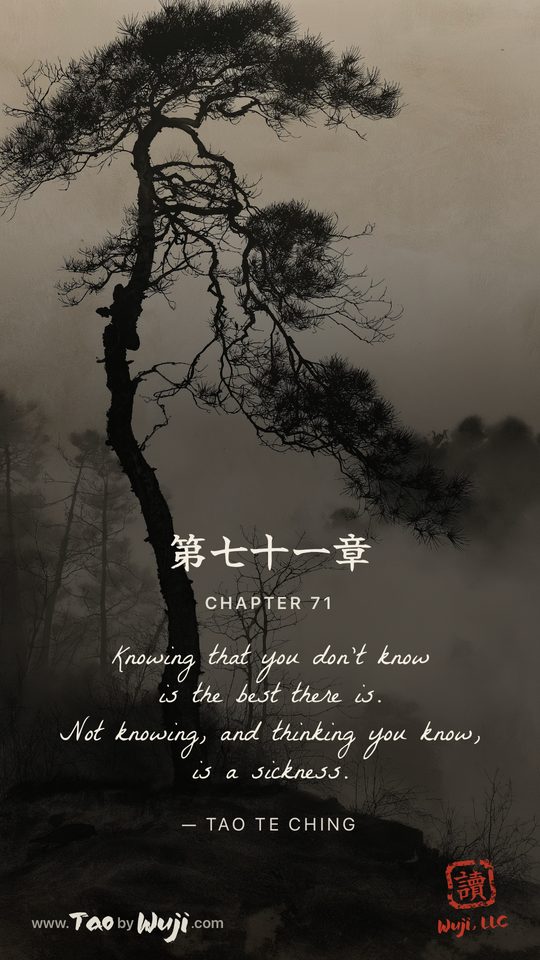
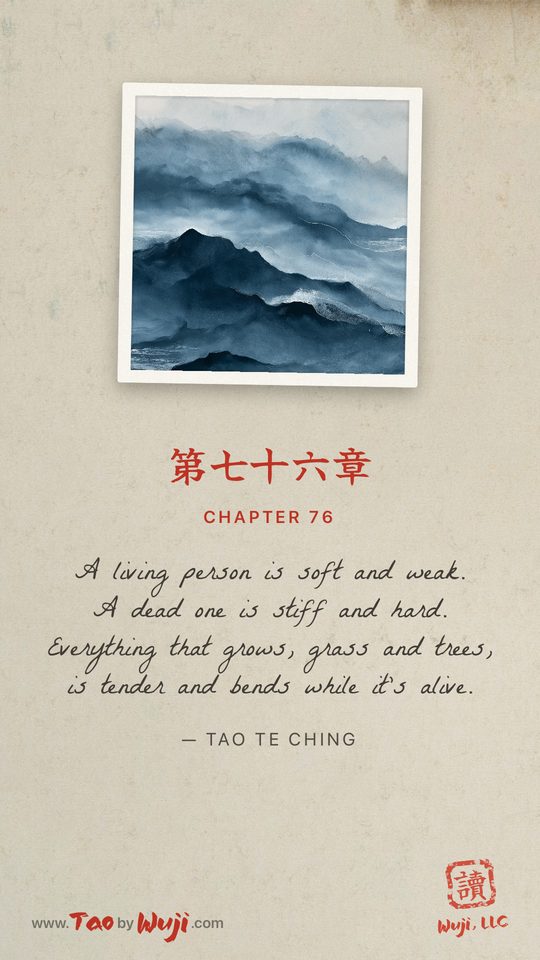
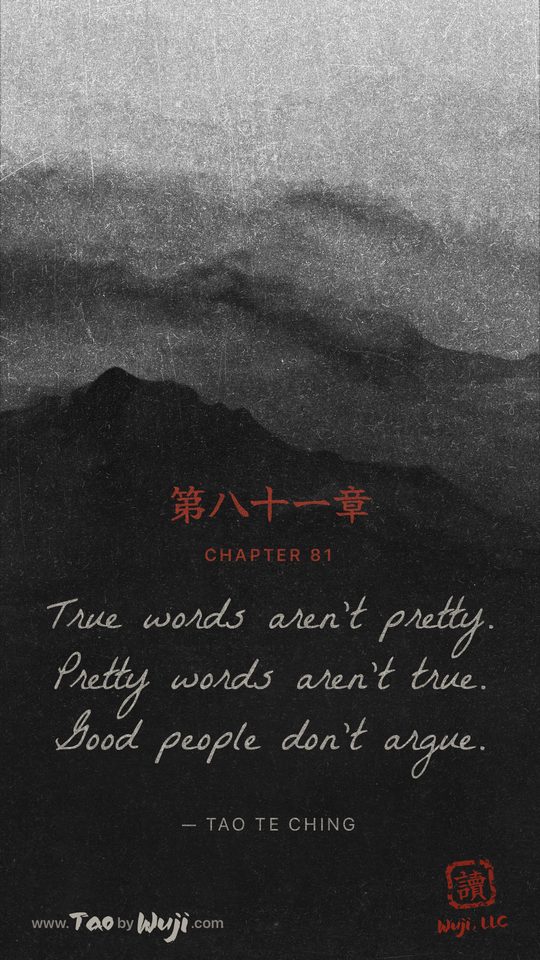
A shared card: lines from chapter one of the Tao Te Ching over one of the paintings A shared card: lines from chapter eight of the Tao Te Ching over one of the paintings A shared card: lines from chapter eleven of the Tao Te Ching over one of the paintings A shared card: lines from chapter twenty-two of the Tao Te Ching over one of the paintings A shared card: lines from chapter thirty-three of the Tao Te Ching over one of the paintings A shared card: lines from chapter forty-three of the Tao Te Ching over one of the paintings A shared card: lines from chapter forty-eight of the Tao Te Ching over one of the paintings A shared card: lines from chapter fifty-eight of the Tao Te Ching over one of the paintings A shared card: lines from chapter sixty-four of the Tao Te Ching over one of the paintings A shared card: lines from chapter seventy-one of the Tao Te Ching over one of the paintings A shared card: lines from chapter seventy-six of the Tao Te Ching over one of the paintings A shared card: lines from chapter eighty-one of the Tao Te Ching over one of the paintings
Devices

Listen on iPhone, iPad, Apple TV or Apple Watch

The watch plays chapters on its own, and its two watch-face complications show today’s chapter or play where you left off. One purchase covers iPhone, iPad, Apple TV and Apple Watch, and everyone in your Family Sharing group can use it; you make it on iPhone, iPad or Apple TV.

FAQ

What is the Tao Te Ching?

The Tao Te Ching is a short book from ancient China, traditionally credited to Lao-tzu. Its eighty-one brief chapters are about the Tao, which means the Way, and how a person can live by it. People have been reading it for more than two thousand years.

Doesn’t the first chapter say the Way can’t be explained?

It does. Chapter one says the Way itself can’t be put into words, and the book goes on for eighty-one chapters anyway. The interpretation of chapter one says it this way: ‘This is not a refusal to teach. It is an instruction on how to listen.’ This app doesn’t try to explain the Way. It helps you understand what each chapter is saying, so you can bring it into your own life.

What are the versions?

Every chapter comes in three versions. Traditional is a classic English translation from 1891. Modern says the same chapter in plain English, and Poetic keeps it as verse, with the images and rhythm first. There’s also an interpretation that explains each chapter, which is a fourth way in.

Which version should I start with?

If you’re new to the book, start with Modern, which says each chapter in plain English. Switch to Traditional, a classic 1891 translation, when you want the older wording. Poetic keeps it as verse, and when a chapter leaves you unsure, the interpretation explains it.

Is there a plain-English version?

Yes. Every chapter has a modern version in everyday English that says what the classic one says without the old-fashioned wording. The Traditional version is still one tap away.

Is there a Tao Te Ching app with audio?

Yes. Tao reads every chapter aloud in three versions, and a spoken interpretation explains each one. The first nine chapters are included for free.

What is an interpretation?

It’s a short spoken explanation of a chapter, a little over a minute long. It says what the chapter means and what it asks of you, and it works through the harder lines. It isn’t another version of the text.

What does chapter one mean?

Chapter one opens by saying the Tao can’t be explained, because whatever can be put into words is not the Tao itself. That isn’t a refusal to teach. It’s an instruction on how to listen. Look with a mind that wants nothing, and you sense the depth behind things. Look with a mind that wants, and you see their edges. The chapter asks you to hold both at once, which it calls the dark, the gate of every wonder.
Is it Tao Te Ching or Dao De Jing?

They’re the same Chinese words written two ways in our alphabet. Tao Te Ching is the spelling most English readers know, and Dao De Jing is the newer pinyin spelling. The app shows the familiar one and has a setting to switch.

Can I hear it in Chinese?

Yes. Turn on Include the original Chinese in Settings and the original Chinese appears beside the other versions, with the text in traditional characters and the chapter read aloud in Mandarin. The first nine chapters are free in Chinese too, like every version. Its recordings download the first time you play them, and the rest of the app stays in English.

Who was Lao-tzu?

Tradition says Lao-tzu (also written Lao Tzu or Laozi) kept the archives of the Zhou court. Most scholars think the book took shape over many years and many hands, and reached something like its present form around the fourth and third centuries before the common era.

Who was James Legge?

James Legge was a Scottish scholar who translated the Chinese classics into English, and his Tao Te Ching appeared in 1891. It’s in the public domain, and it’s the Traditional version in Tao.

How long does a chapter take?

Chapter one takes about forty-five seconds to hear in the Traditional version and about half a minute in the Modern and Poetic ones. All eighty-one chapters in the three versions come to about two and a half hours, and more than four hours once you add the interpretations.

Can I read instead of listen?

Yes. On iPhone and iPad every chapter has a text page, and you can follow along as each word lights up or read it in silence.

Do I have to read it in order?

No. Tao opens where you left off, and a button picks a random chapter if you’d rather not choose. You can also set a daily reminder, and slow the reading down or speed it up.

Do the paintings really move?

Yes. Each chapter plays over an ink painting that moves while it’s read. There are nine paintings, a new one every nine chapters, and each has its own sound underneath.

What’s free?

The first nine chapters are included for free, in every version, along with their interpretations and a short introduction to the book. Purchasing gives you access to the other seventy-two. It’s a one-time purchase with no subscription.

How much does it cost?

The first nine chapters are free. One purchase opens the other seventy-two, and there is no subscription. The price is in the box at the foot of this page.

What does it run on?

Tao runs on iPhone, iPad, Apple TV and Apple Watch.

Does it work on Apple Watch?

Yes. The watch plays chapters by itself, and its two watch-face complications show today’s chapter or play where you left off.

Is it in English?

Yes. The app, the three versions and the spoken explanations are in English. In Settings you can also add the original Chinese, read aloud in Mandarin.

Take it one chapter at a time

FreeThe first nine chapters, each in three versions and each with its own interpretation. The introduction to the book is free too.
$4.99One purchase opens the other seventy-two chapters.

No subscription. No ads. No account. The app, the three versions and the spoken explanations are in English.

Download on the App Store Coming soon to the App Store
Wuji

We believe that a calm mind can change everything.

We make purpose-built apps to help you step away from the chaos, wherever you are.